First steps, screen by screen
Five minutes is all it takes to set your rules. Here's the full journey, with the app's real screens.
Screens shown in French; the app is fully available in English.
1Set up your home
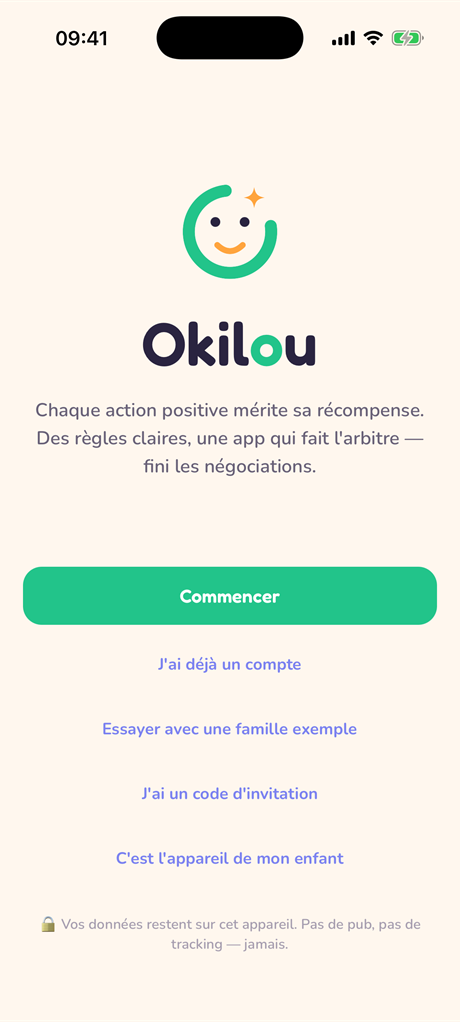
Open the app and tap Start. That's it. Okilou works without an account: your data stays on your phone unless you decide otherwise.
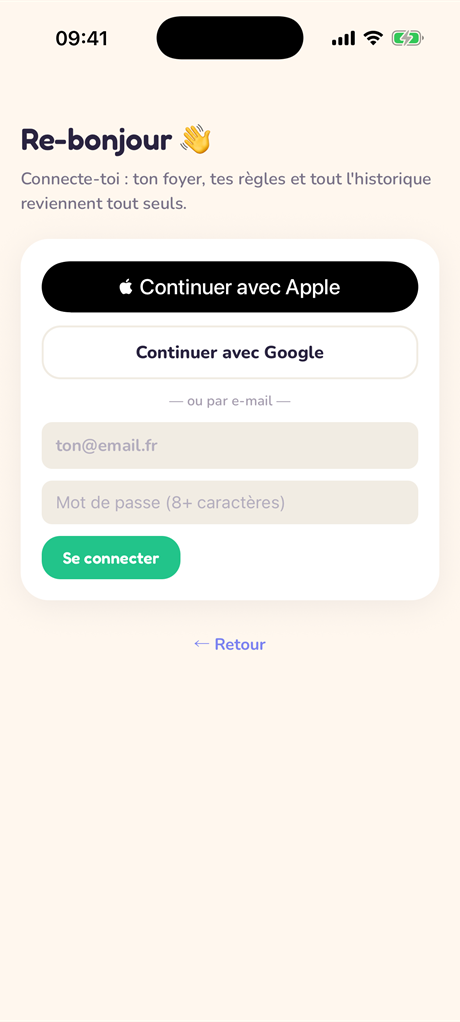
- I already have an account: your home, rules and history come back on their own.
- I have an invitation code: the other parent invited you; everything is ready.
- This is my child's device: the child's tablet or phone joins the home in child mode only.
2Add a child
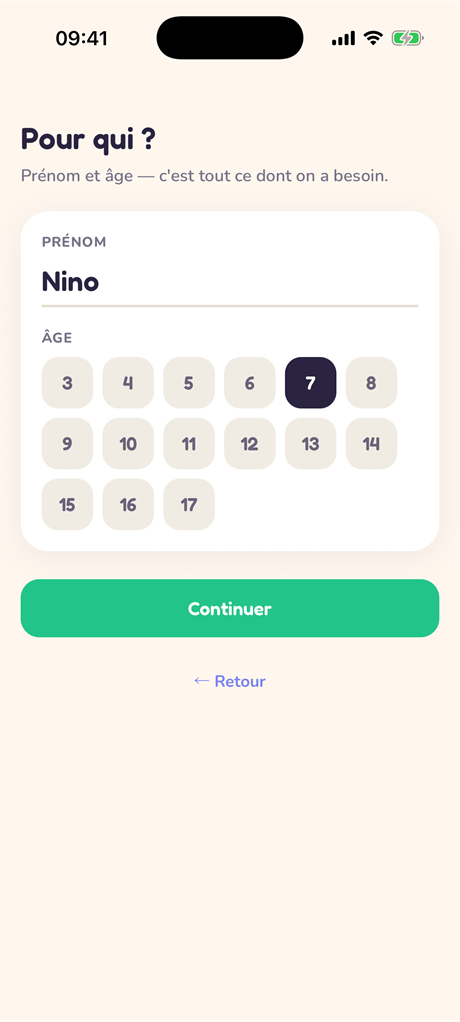
A first name and an age: that's all Okilou needs. No birth date, no mandatory photo, no questionnaire: data minimization isn't optional; it's the design.
3Pick a starting point
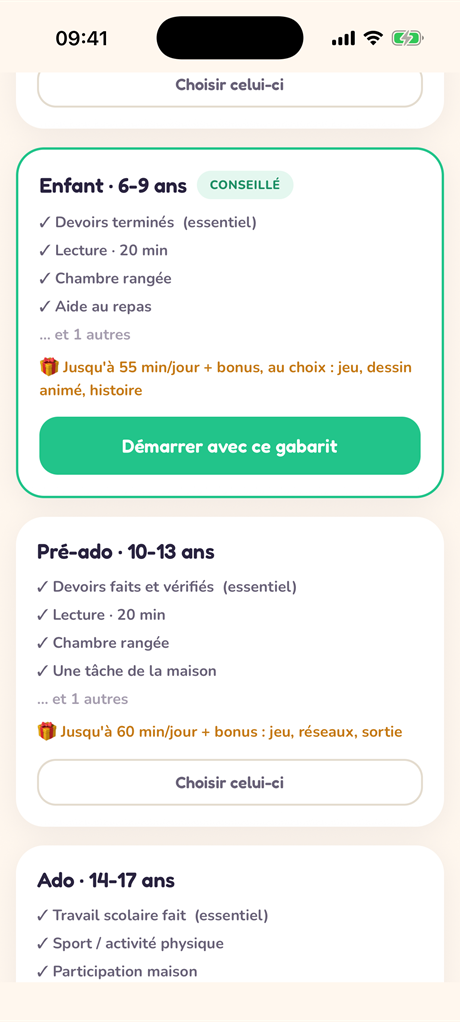
Based on age, Okilou suggests a rules template: Little one (3-5), Child (6-9), Pre-teen (10-13) or Teen (14-17). Teens, for instance, run on a weekly gauge rather than a daily one.
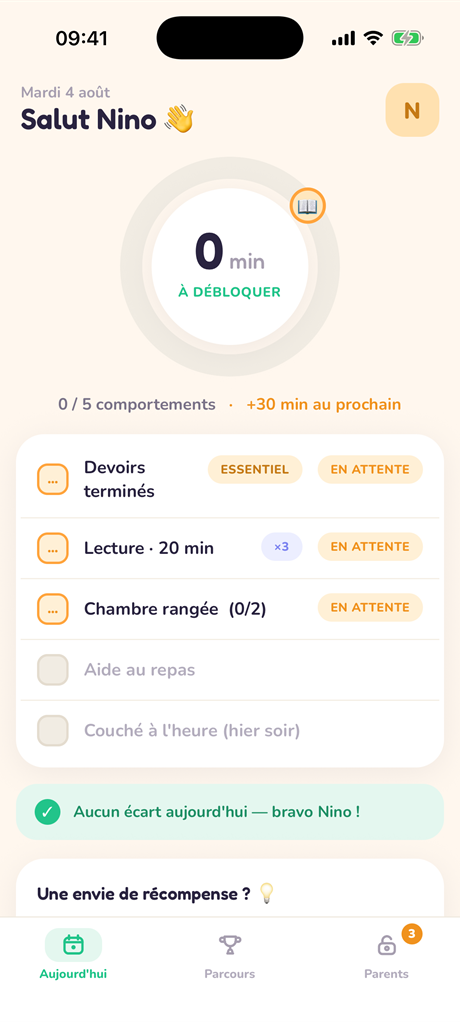
4Your child checks off wins
On their screen, the child sees their day: their actions, their gauge, and what the next win will unlock. When something's done, they check it; the app asks them to confirm, then the declaration shows up as pending on your side.
5You're notified, you validate
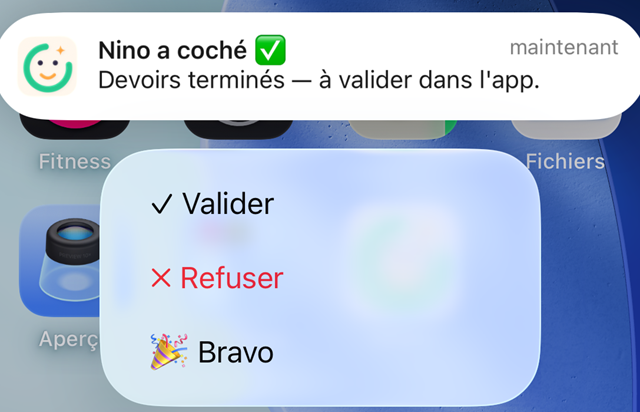
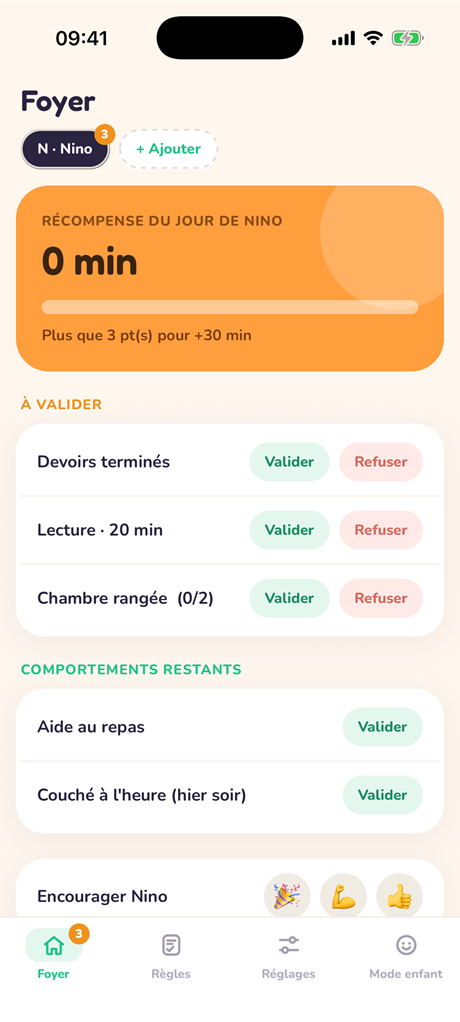
A notification arrives: you can validate, decline or send a "Bravo" right from the notification, without opening the app.
6What was agreed unlocks
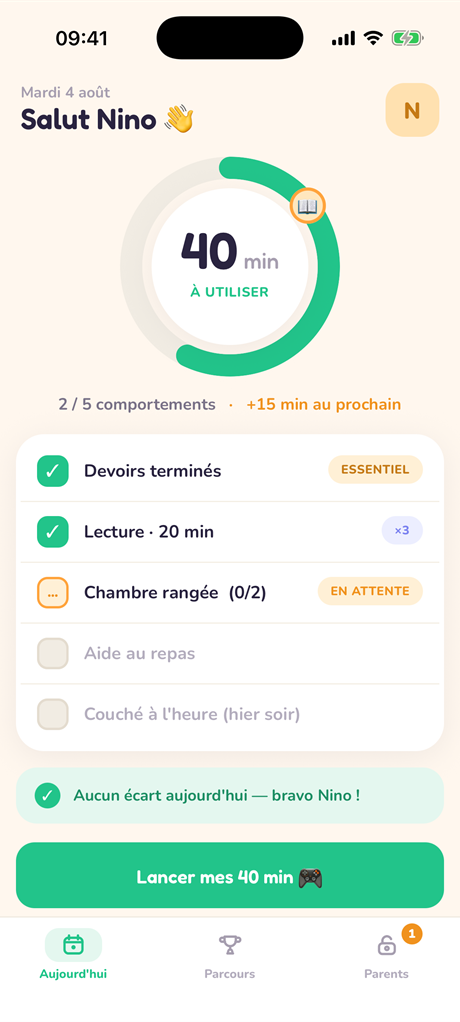
Each validation adds points; milestones unlock minutes or menu rewards. The child starts their minutes when they want to use them; the countdown survives even if the app closes. The parent's dashboard keeps a record of everything validated today (any validation can be undone, always traced).
7Consistency made visible
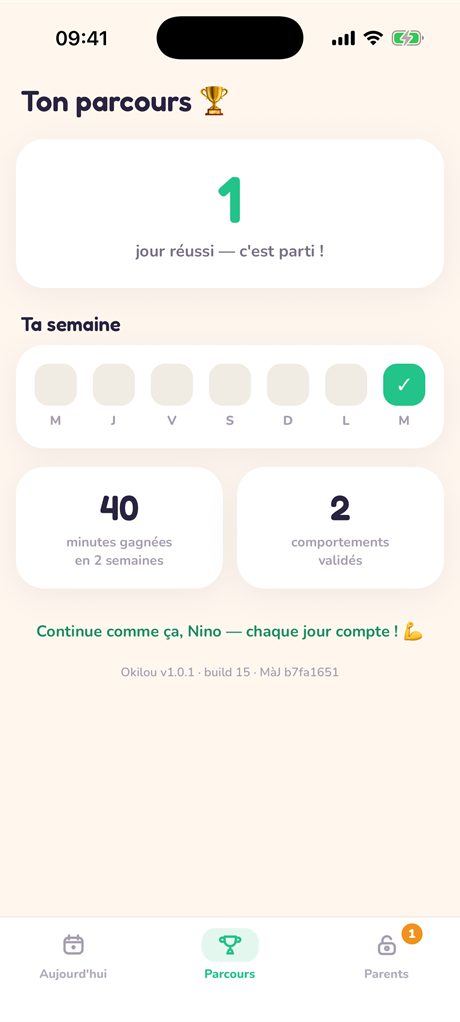
The Journey tab shows the child their day streak, their week and their earned minutes. It's their own progress: no leaderboard, no comparison.
8Adjust the rules, calmly
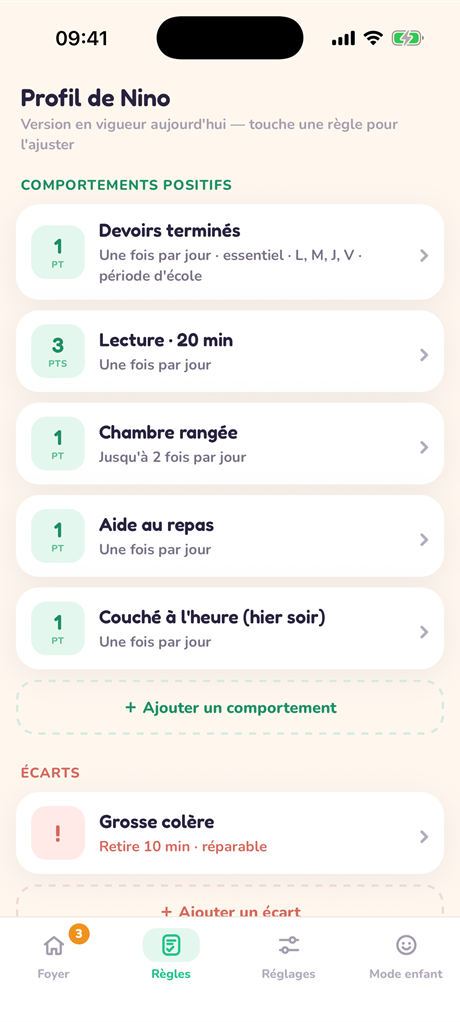
The Rules tab reads at a glance: each rule in one sentence, with its points, its frequency (“a cap, not a goal”), its days. Tap a rule to open its sheet: every setting explains itself: essential or not, automatic validation, small checkable steps, school days or holidays. A modified rule applies tomorrow, never partway through the day. A deal is a deal: that's the neutral referee.
9Two parents, or two homes
Create an account (email, Google or Apple) to sync: invite the second parent with a code or QR, pair the child's device (phone or tablet) in locked child mode.
Shared custody? Invite the other home from Settings: co-administered shared rules or independent profiles, week A/B, 2-2-5-5 or weekend calendars, one-off swaps. On "other home" days, the child's screen stays calm, and the journey never splits in two.